
Table of Contents
The economics of releasing police video are being rewritten in the courts. In April 2026, a Colorado appellate court ruled that a department could not condition the release of body-worn camera (BWC) footage depicting possible officer misconduct on payment of a redaction bill — extending a trend the California Supreme Court set back in 2020, when it held that agencies could no longer bill requesters for the staff time spent redacting electronic records. Together the two decisions point in one direction: courts and legislatures are tightening what public agencies may charge to prepare video for release. For records officers and legal counsel, that makes video redaction fees less a routine line item and more a compliance question — one that has to be estimated, justified, and documented with the same care as the redaction work itself.
What Video Redaction Fees Actually Cover
When a member of the public files a records request — under the federal Freedom of Information Act (FOIA) or a state's equivalent open-records law — an agency that holds video may incur several distinct costs before it can release anything. Understanding which of those costs are chargeable, and under what authority, is the foundation of any defensible fee. The usual components are:
- Search and retrieval. Locating responsive footage across evidence systems, camera platforms, and DVRs.
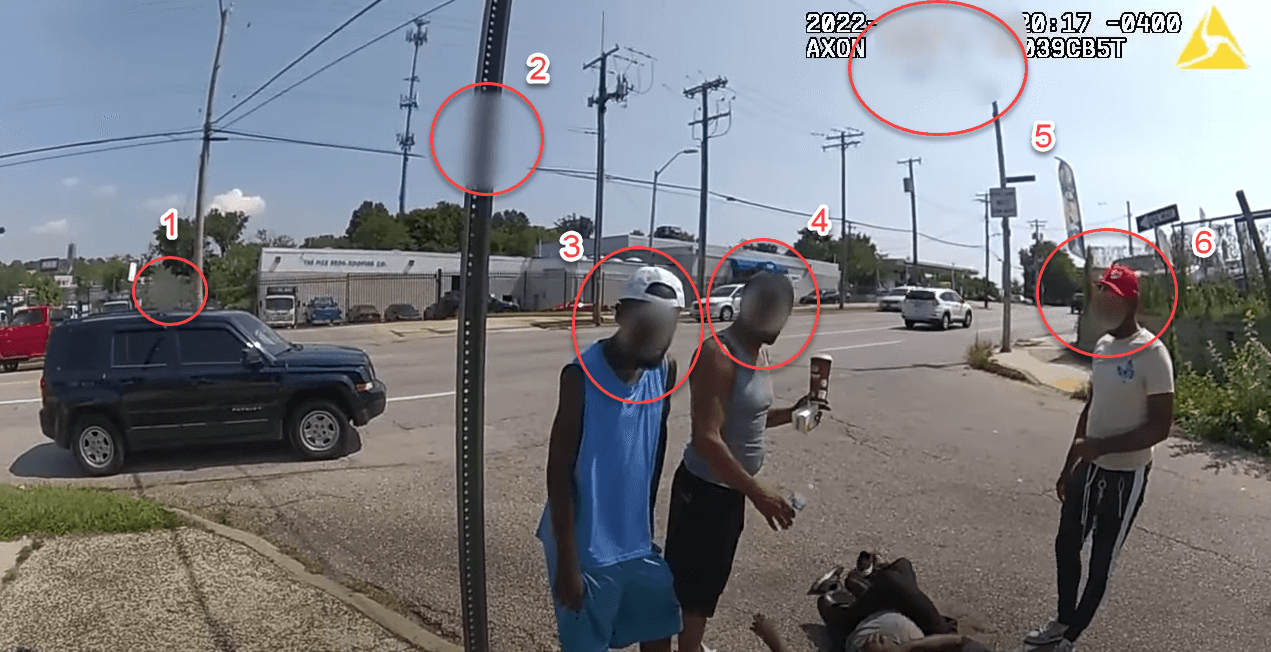
- Review. Watching the footage to identify exempt material — faces of victims and minors, personally identifiable information (PII), medical details, and information tied to active investigations.
- Redaction. The technical work of masking video and muting or filtering audio so that exempt content is removed while releasable content remains.
- Duplication and delivery. Producing the finished file and transferring it to the requester.
The critical distinction is that these components are treated very differently across jurisdictions. Some public records laws let an agency recover the actual cost of duplication but not the labor of segregation; others permit reasonable staff-time charges; and a growing number specifically bar recovering the cost of redacting electronic records. Before an agency quotes a single dollar of video redaction fees, it needs to know which of these buckets its state statute actually authorizes.
The Legal Ceiling on Redaction Fees Is Moving
The last several years have produced a steady tightening of what agencies may charge, and the trend is worth understanding before you set a fee schedule.
California. In National Lawyers Guild v. City of Hayward (2020), the California Supreme Court interpreted the state's Public Records Act to mean that agencies may charge for the cost of data extraction but not for the time spent redacting exempt material from electronic records such as body camera video. In practice, that shifted the labor cost of redaction from the requester to the agency.
Colorado. In SMB Advertising, Inc. v. City of Boulder (2026 COA 25), the Colorado Court of Appeals held that the state's Law Enforcement Integrity Act does not permit a law enforcement agency to condition the production of body-worn camera recordings depicting possible officer misconduct on payment of fees. The department had sought roughly $2,857 for search, retrieval, and redaction; the court concluded the Integrity Act's mandatory release obligation could not be gated behind that charge. The holding is specific to Colorado's statute and to misconduct footage — it is not a nationwide rule — but it reflects the same judicial skepticism toward fees that block access.
Legislative activity. Statehouses are moving in parallel. A bill introduced in New Hampshire in 2026 (HB 1587), for example, would place BWC footage squarely under the state's right-to-know law, set a short response deadline, and mandate redaction of PII, images of minors, and sexual-assault victims before release. Whether or not any single bill becomes law, the direction is consistent: faster release, mandatory redaction, and closer scrutiny of anything that looks like a paywall.
Know Your State's Fee Authority Before You Quote
Because the rules vary so widely, the single most important step is also the least technical: confirm what your own statute and case law allow before you respond to a requester. A defensible position starts with answering a few questions in writing:
- What does the statute authorize? Identify whether your public records law permits charges for search, review, redaction, or only duplication — and whether any cap or hourly rate applies.
- Has a court narrowed it? Check whether appellate decisions in your state have limited redaction-cost recovery, as California and Colorado courts have done.
- Does a special category apply? Footage of alleged misconduct, footage involving minors, or records with statutory release deadlines may carry different fee rules than routine requests.
- Is there a published fee schedule? Charges applied consistently under a written, adopted schedule are far easier to defend than ad hoc estimates.
Agencies that outsource redaction should not assume a vendor invoice can simply be passed through to the requester. The vendor's price is a cost the agency incurs; whether any part of it is recoverable is still governed by the agency's own state law. Our look at the broader debate over video redaction fees covers the policy tensions underneath these rules.
Building a Defensible Fee Estimate
Where fees are permitted, the goal is an estimate a requester — or a judge — can follow line by line. A repeatable process helps every request stand up to scrutiny:
- Scope the footage first. Determine how many hours of video are actually responsive before estimating anything. An estimate built on guesswork invites a challenge.
- Separate chargeable from non-chargeable work. Break the estimate into the components your statute allows, and leave out any category a court or statute has placed off-limits.
- Use realistic per-minute or per-hour rates. Base redaction time on how the footage actually behaves — high-motion BWC video with many bystanders takes longer than a static interview-room recording.
- Provide the estimate in writing, up front. Give the requester a clear figure and the basis for it before work begins, and offer to narrow the request to reduce cost.
- Distinguish an estimate from a deposit demand. Requiring full prepayment as a condition of release is precisely the practice courts have scrutinized; check that your state allows it before you insist on it.
For agencies fielding many requests at once, consistency is the safeguard against claims of selective or punitive pricing. Our guide to managing high-volume video and audio FOIA requests outlines workflows that keep estimates uniform across a busy queue.
Documenting the Work So the Charge Holds Up
A fee is only as defensible as the record behind it. Federal guidance reinforces this: the U.S. Department of Justice's best practices for video redaction treat the process as an auditable evidence workflow rather than casual editing, and public-records authorities stress that a heavy administrative burden or a large volume of footage is not, by itself, a lawful reason to withhold a releasable record. Agencies are expected to use available tools to release what is segregable. That expectation cuts two ways: it limits when you can refuse, and it raises the bar for justifying what you charge. Practical documentation includes:
- A redaction log. A record of each redaction and the exemption that justifies it, which doubles as support for the review time billed.
- Time and cost records. Actual hours spent on chargeable tasks, tied to the rates in your published schedule.
- A quality-assurance record. Evidence that the release was reviewed for accuracy, which protects both the redaction and the fee if either is questioned.
- Correspondence. The written estimate, any offer to narrow the request, and the requester's response.
This is the same discipline that makes the underlying release defensible in the first place — the principles in our overview of defensible video redaction for FOIA apply directly to how the accompanying fee is justified.
When a Fee Becomes a Barrier
The risk agencies most often underestimate is that an excessive charge can be treated as a constructive denial of the request — a refusal to produce records dressed up as a bill. That exposes the agency to the same litigation and reputational cost as an outright withholding, without the legal footing. Two safeguards reduce that risk:
- Fee waivers and reductions. Clear, written criteria for waiving or reducing fees — for requests in the public interest, or where the requester cannot pay — keep access from turning on ability to pay.
- Proportionality. A fee that dwarfs the actual cost, or that appears aimed at discouraging a particular requester, is the kind of charge courts have struck down. Keep the number tied to documented, authorized cost.
The practical lesson from these rulings is not that agencies can never recover costs — many still can — but that fees have to serve cost recovery, not gatekeeping. When redaction labor is the bottleneck, the more durable fix is usually to make the work faster and more consistent, whether in-house or through a specialized partner, rather than to price access out of reach.
Conclusion
Video redaction fees sit at the intersection of two obligations agencies cannot ignore: protecting the private information inside their footage and honoring the public's right to see it. The legal ground is shifting toward tighter limits on what can be charged, and the agencies that stay out of trouble are the ones that know their own statute, estimate in writing, document every chargeable hour, and treat a fee as cost recovery rather than a barrier. Handled that way, a defensible fee is simply the paperwork trail of a defensible release.
Facing a backlog that makes fees hard to justify? Focal Forensics provides fast, CJIS-aligned video redaction services that help agencies meet public-records deadlines and keep every release documented and defensible. Contact us to talk through your workload — Phone: 303-900-3585 · Email: info@focalforensics.com
Sources
- FOIA.gov / Chief FOIA Officers Council – Best Practices for Video Redaction
- U.S. Department of Justice, Office of Information Policy – Best Practices for Video Redaction
- Colorado Court of Appeals – SMB Advertising, Inc. v. City of Boulder (2026 COA 25)
- Liebert Cassidy Whitmore – California Supreme Court Ruling on Costs of Redacting Body-Cam Footage (National Lawyers Guild v. City of Hayward)
- National Conference of State Legislatures – Body-Worn Camera Laws Database
- Reporters Committee for Freedom of the Press – Assessable Fees and Limitations
- Municipal Research and Services Center – Copying Charges for Public Records