
Table of Contents
- What the Silent Witness Standard Means for Body Camera Authentication
- From Trial Authentication to FOIA Release: Why the Same Logic Applies
- What SWGDE's Updated Redaction Guidelines Require
- AI-Assisted Redaction: Where It Helps and Where It Cannot Replace Documentation
- Building a Defensible Video Redaction Record
- Common Defensibility Red Flags
- Conclusion
- Sources
- FAQs
In July 2025, the South Dakota Supreme Court decided State v. Geist, 2025 S.D. 32, a case that turned on a question every agency releasing body-worn camera (BWC) video should care about: what does it take to prove a recording is what it claims to be when the officer who made it cannot testify? The court upheld the trial court's decision to admit the footage under the "silent witness" theory of authentication, relying not on live testimony from the recording officer but on the technical record itself, including a digital watermark tied to the camera's serial number and timestamps that matched the 911 call log and case report. The ruling was about trial admissibility, not a public-records redaction, but the underlying standard has direct implications for what counts as defensible video redaction. If a court can authenticate raw footage on the strength of its documented process rather than a witness's memory, the same logic applies with even more force to a video that has been deliberately altered before release.
What the Silent Witness Standard Means for Body Camera Authentication
The silent witness theory allows video or photographic evidence to be authenticated without a witness who observed the recorded event, provided the party offering it lays an adequate foundation showing that the recording process itself was reliable. Courts applying the doctrine typically weigh factors such as the recording device's general reliability, whether it was functioning properly, how the file was preserved and copied after creation, and whether the content can be tied back to a specific, verifiable source. In Geist, the South Dakota Supreme Court described the test as "flexible" and "fact-based," meaning no single factor is required, but the more of them a party can document, the stronger the foundation.
That is a subtle but important shift from thinking about video evidence as something a person vouches for, to thinking about it as something a documented process vouches for. It is also exactly the framework defensible video redaction has to satisfy when a redacted release, rather than a raw exhibit, ends up being challenged.
From Trial Authentication to FOIA Release: Why the Same Logic Applies
Most redacted video never reaches a courtroom. It goes out in response to a public-records request, gets published by a newsroom, or gets handed to opposing counsel in discovery. But the same question a judge asks under the silent witness theory, is this what it claims to be, and can the process that produced it be trusted, is exactly the question a requester's attorney, a defense attorney, or a city's own risk management office will ask if a redacted release is ever second-guessed. An agency that cannot show what was changed, who changed it, when, and under what authority is in a weaker position than one that can, regardless of whether the dispute ever reaches a judge.
This is where defensible video redaction diverges from merely competent redaction. A technically excellent redaction, clean blurs, no missed faces, consistent treatment throughout, can still be indefensible if there is no record of how it was produced. Conversely, defensible video redaction built on a documented process with a clear audit trail gives an agency something to point to even before anyone questions the footage itself.
What SWGDE's Updated Redaction Guidelines Require
The Scientific Working Group on Digital Evidence (SWGDE) publishes the closest thing the field has to a technical standard for defensible video redaction: the Video and Audio Redaction Guidelines, most recently updated in December 2025 as version 18-M-001-2.3. The guidelines are written for practitioners who already understand digital video and audio concepts, and they treat documentation as inseparable from the redaction itself. Core expectations include:
- Work from a duplicate, never the original. The source file should remain untouched in the evidence system so it can be re-examined if the redacted version is ever questioned.
- Log what was redacted and why. A defensible video redaction workflow records the specific content removed and the exemption or policy basis for removing it, not just a general note that redaction occurred.
- Preserve hash values. Hashing the original and the redacted output lets an agency demonstrate later that neither file was altered outside the documented process.
- Maintain contemporaneous chain-of-custody notes. Records should show who handled the file, what software was used, and when each step occurred, created at the time the work happens rather than reconstructed afterward.
None of this is exotic. It is the same discipline SWGDE and NIST apply to digital evidence handling generally, adapted to the specific problem of defensible video redaction: releasing a deliberately altered copy of an original recording.
AI-Assisted Redaction: Where It Helps and Where It Cannot Replace Documentation
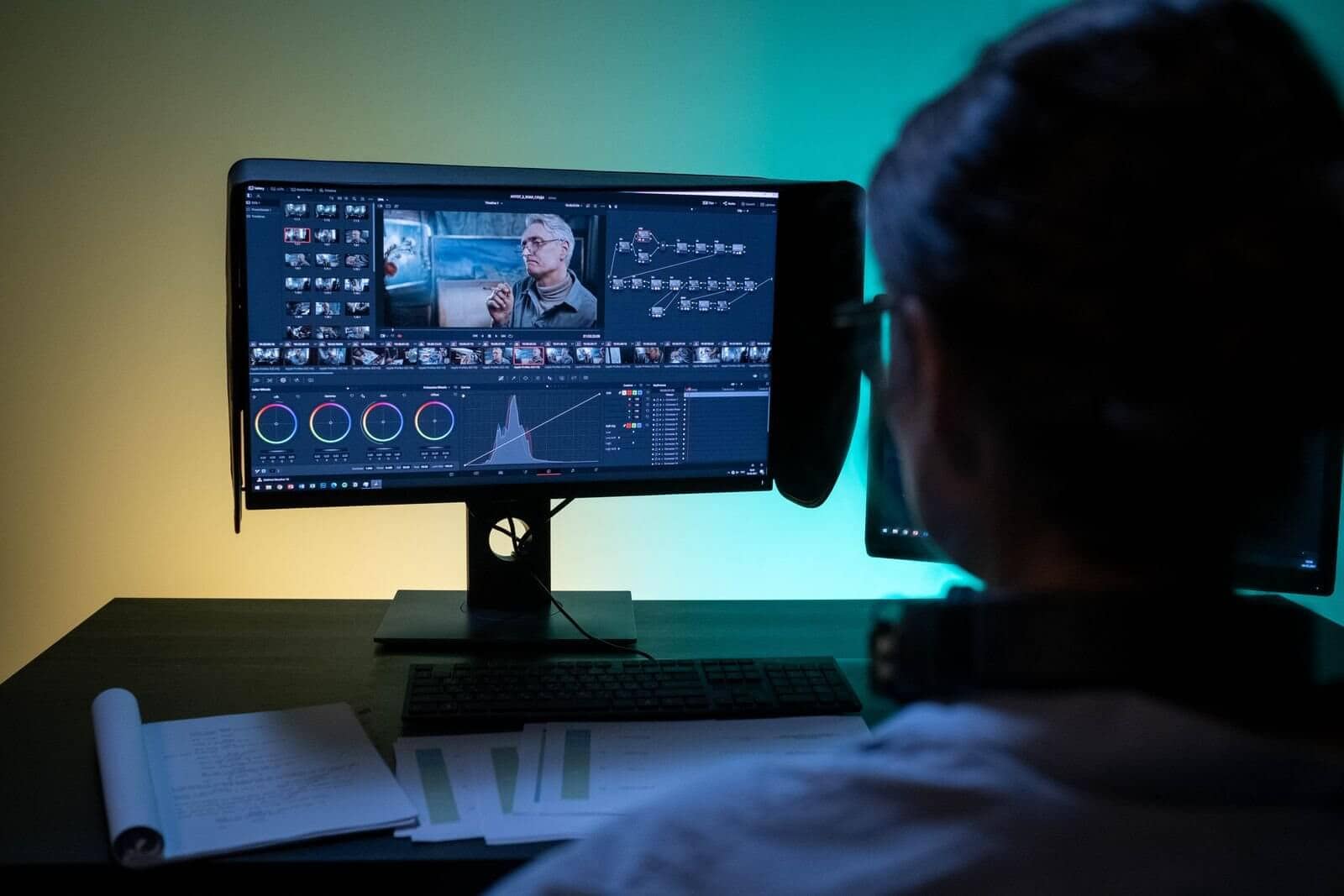
Automated detection tools, the kind that track faces, license plates, and screens across thousands of frames, have become a standard part of redaction work, and for good reason: they catch things a person scanning long footage manually will eventually miss from fatigue alone. But automated detection answers a different question than the one a defensibility challenge asks. Detecting content is a technical task; documenting that the right content was removed, by an accountable process, for a lawful reason, is a governance task. A vendor or agency that can only say "the software found it" has not actually built the record that defensible video redaction depends on.
The defensible video redaction pattern, and the one our earlier guide to choosing a video redaction company recommends evaluating for, pairs automated detection with frame-by-frame human review and a written log of both. AI speeds up the first pass; a documented human decision closes the loop that a court, or a skeptical requester, will eventually ask about.
Building a Defensible Video Redaction Record
Agencies and vendors can build defensible video redaction on the same kind of foundation the Geist court accepted for raw footage by treating every redacted release as if its process, not just its output, might someday need to be explained under oath. A practical record includes:
- Preserve the original, unaltered file. Store it separately from the working copy and never edit it directly.
- Log the recording's own technical markers. Device or camera identifiers, timestamps, and file metadata should be captured before any editing begins, the same details that carried the day in Geist.
- Record every redaction decision. Note what was removed, the applicable statutory or policy exemption, and the identity of the reviewer who approved it.
- Hash both versions. Generate and retain hash values for the original and the released file so integrity can be demonstrated later without re-litigating memory.
- Run a second-person review. Have someone other than the person who performed the redaction verify the final output before release.
- Retain the record with the case file. Keep the redaction log alongside the file itself, using the same retention schedule the underlying evidence follows, so the two cannot become separated over time.
Our video evidence chain of custody checklist and bodycam video redaction best practices guide both go deeper on individual steps in this process; the point here is that each step of defensible video redaction is doing the same job a live witness would otherwise do: establishing that the process, not just the person, can be trusted.
Common Defensibility Red Flags
The same review that turns up a strong redaction record tends to surface weak ones just as quickly. Agencies evaluating their own workflow, or an outside vendor's, should treat the following as warning signs that a process falls short of defensible video redaction:
- No log of what was redacted. A finished video with no accompanying record of what was removed and why leaves an agency unable to answer the first question a challenge will raise.
- Editing performed directly on the source file. If there is no untouched original to fall back on, there is no way to verify the redacted version against anything.
- "The software did it" as the only explanation. Automated detection without a documented human review step leaves accountability nowhere to land.
- No timestamped chain of custody. Reconstructed notes written after the fact carry far less weight than contemporaneous records.
- Inconsistent treatment across a release. Faces, plates, or screens handled differently from clip to clip invite the question of what else in the process was inconsistent.
Conclusion
State v. Geist did not decide a redaction case, but it is a useful reminder of where the law is heading on recorded evidence generally: toward crediting documented, verifiable process over personal recollection. Agencies and their redaction partners who build that same discipline into every release, preserving originals, logging decisions, hashing files, and reviewing with a second set of eyes, are not just following good practice. That is what defensible video redaction looks like in practice: the exact kind of record a court, or a skeptical requester, would look for if the footage were ever questioned.
Focal Forensics builds defensible video redaction documentation into every job: automated detection paired with frame-by-frame human review, a written redaction log, and a chain of custody an agency can hand to counsel without hesitation. Learn more about our video redaction services or reach out to discuss your agency's current workflow.
Phone: 303-900-3585 · Email: info@focalforensics.com
Sources
- South Dakota Supreme Court: State v. Geist, 2025 S.D. 32 (official opinion)
- Justia: State v. Geist, South Dakota Supreme Court (2025)
- E-Discovery LLC: The Silent Witness Theory of Authentication of Video Evidence
- SWGDE: Video and Audio Redaction Guidelines (18-M-001-2.3, December 2025)
- SWGDE: Video and Audio Redaction Guidelines, document listing
- Bureau of Justice Assistance: Body-Worn Camera Toolkit, Privacy